To display in FULL SCREEN hover the cursor over the image above and click the top left zoom button
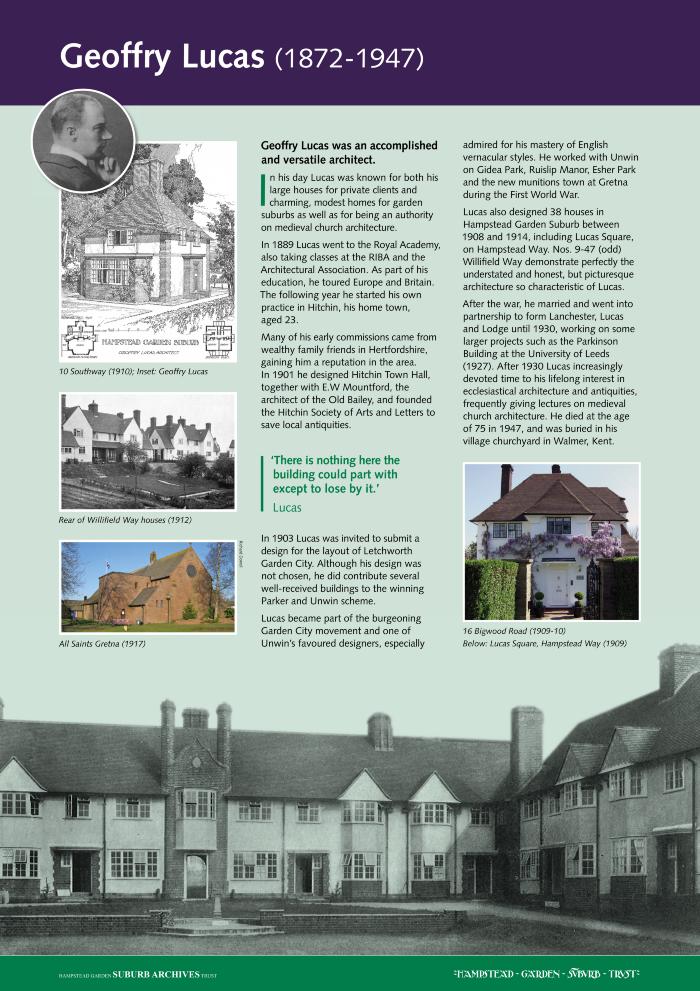
Geoffry Lucas was an accomplished and versatile architect.
In his day Lucas was known for both his large houses for private clients and charming, modest homes for garden suburbs as well as for being an authority on medieval church architecture.
In 1889 Lucas went to the Royal Academy, also taking classes at the RIBA and the Architectural Association. As part of his education, he toured Europe and Britain. The following year he started his own practice in Hitchin, his home town, aged 23.
Many of his early commissions came from wealthy family friends in Hertfordshire, gaining him a reputation in the area. In 1901 he designed Hitchin Town Hall, together with E.W. Mountford, the architect of the Old Bailey, and founded the Hitchin Society of Arts and Letters to save local antiquities.
In 1903 Lucas was invited to submit a design for the layout of Letchworth Garden City. Although his design was not chosen, he did contribute several well-received buildings to the winning Parker and Unwin scheme.
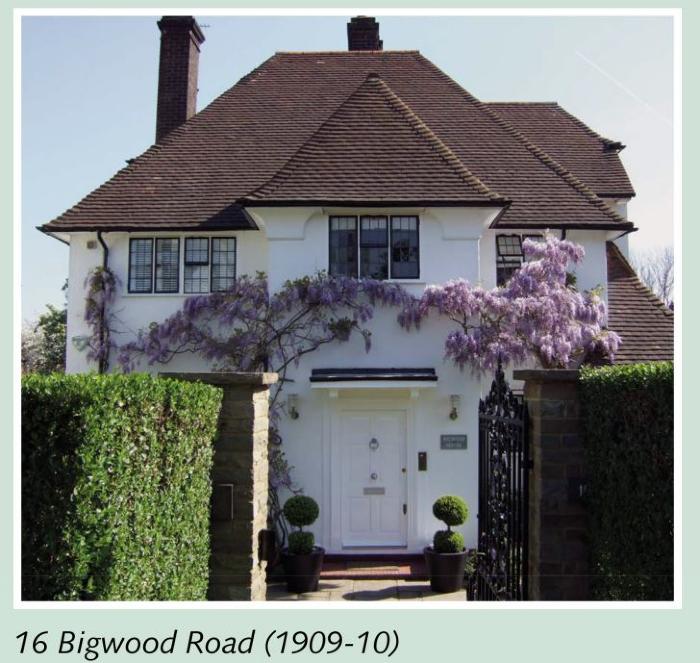
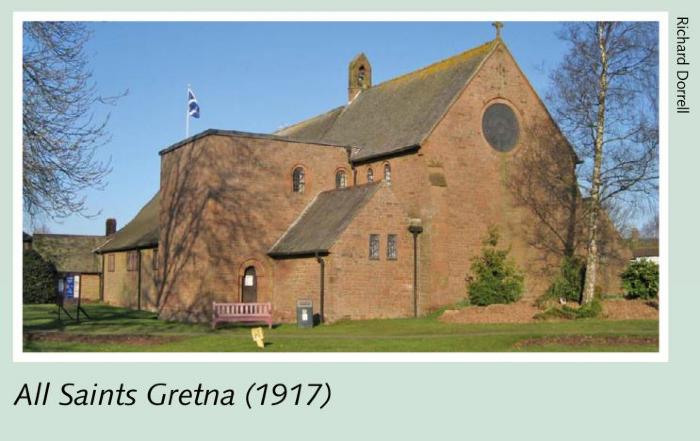
Lucas became part of the burgeoning Garden City movement and one of Unwin’s favoured designers, especially admired for his mastery of English vernacular styles. He worked with Unwin on Gidea Park, Ruislip Manor, Esher Park and the new munitions town at Gretna during the First World War.
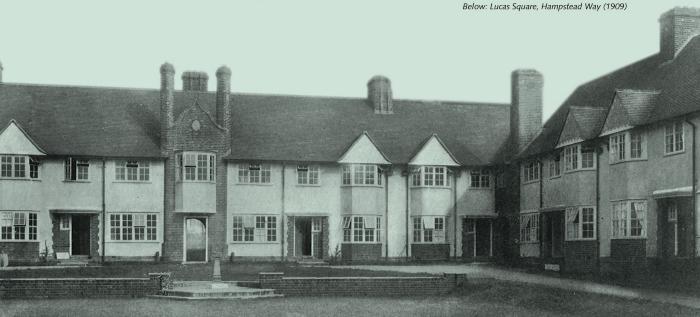
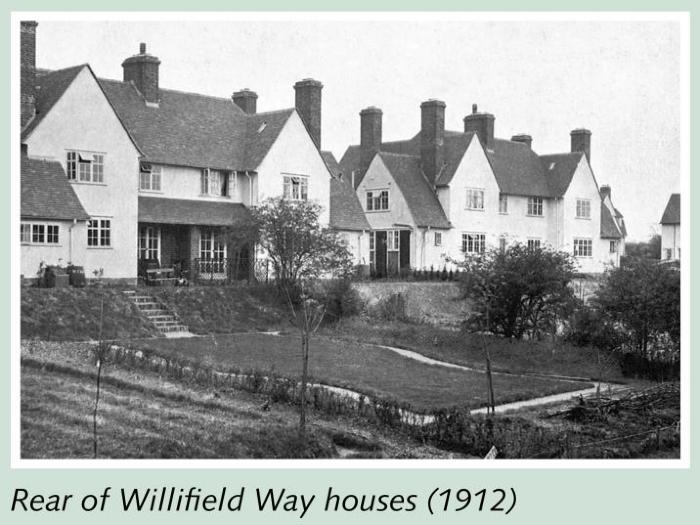
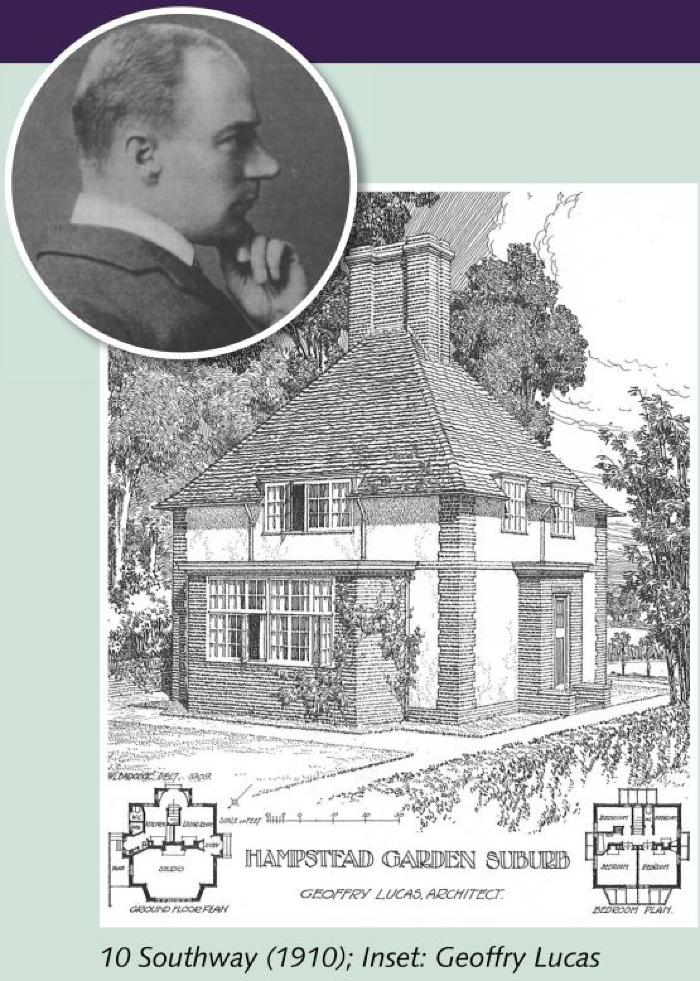
Lucas also designed 38 houses in Hampstead Garden Suburb between 1908 and 1914, including Lucas Square, on Hampstead Way. Nos. 9-47 (odd) Willifield Way demonstrate perfectly the understated and honest, but picturesque architecture so characteristic of Lucas.
After the war, he married and went into partnership to form Lanchester, Lucas and Lodge until 1930, working on some larger projects such as the Parkinson Building at the University of Leeds (1927). After 1930 Lucas increasingly devoted time to his lifelong interest in ecclesiastical architecture and antiquities, frequently giving lectures on medieval church architecture. He died at the age of 75 in 1947, and was buried in his village churchyard in Walmer, Kent.