To display in FULL SCREEN hover the cursor over the image above and click the top left zoom button
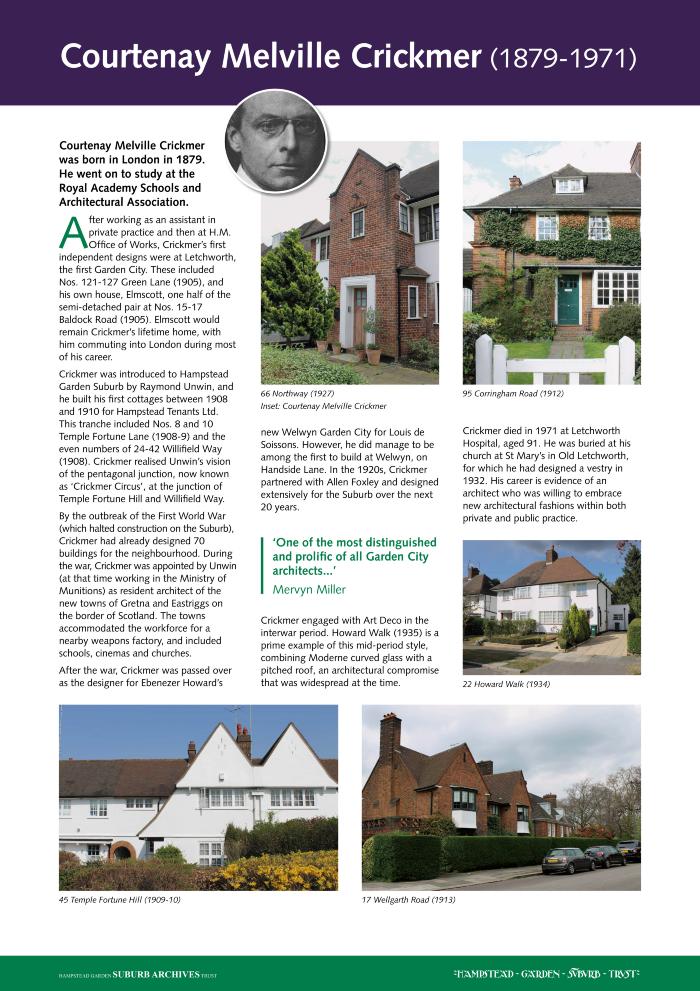
Courtenay Melville Crickmer was born in London in 1879. He went on to study at the Royal Academy Schools and Architectural Association.
After working as an assistant in private practice and then at H.M. Office of Works, Crickmer’s first independent designs were at Letchworth, the first Garden City. These included Nos. 121-127 Green Lane (1905), and his own house, Elmscott, one half of the semi-detached pair at Nos. 15-17 Baldock Road (1905). Elmscott would remain Crickmer’s lifetime home, with him commuting into London during most of his career.
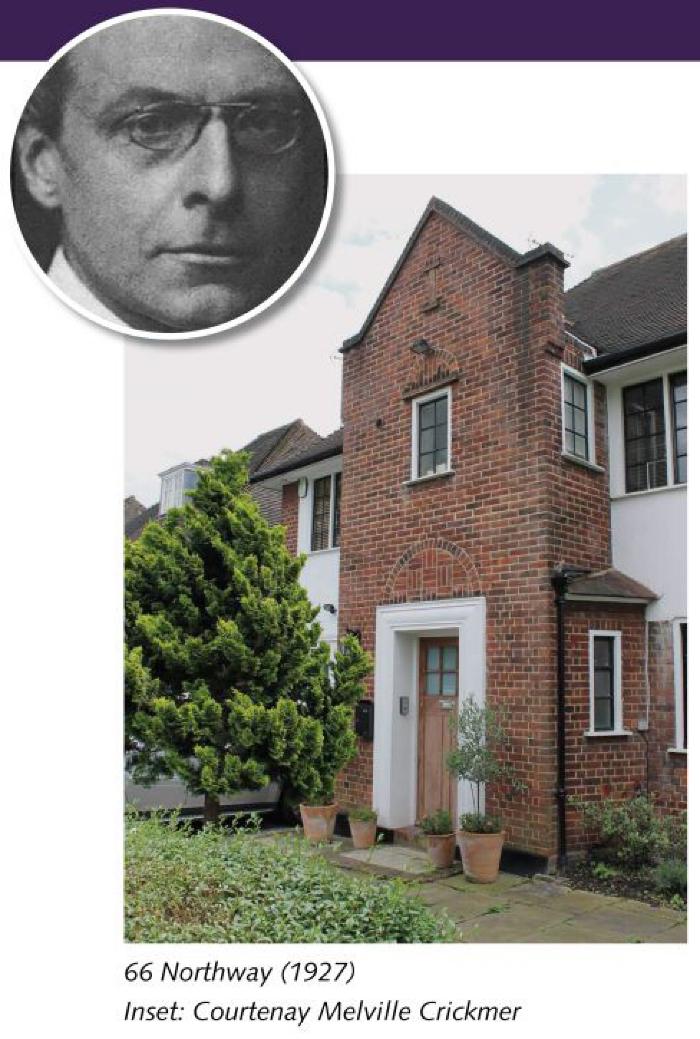
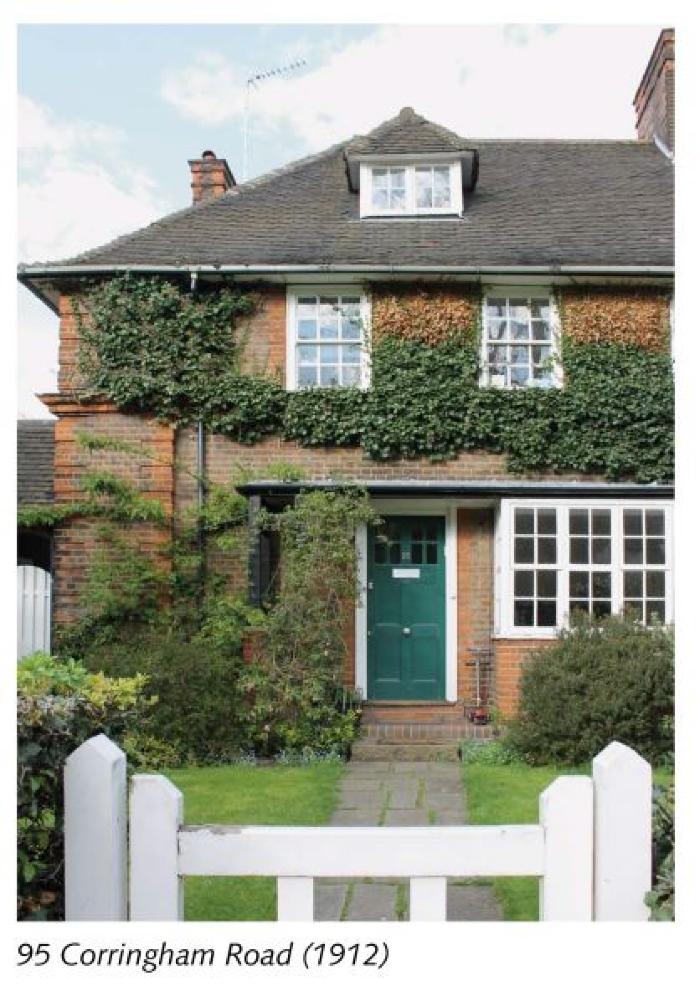
Crickmer was introduced to Hampstead Garden Suburb by Raymond Unwin, and he built his first cottages between 1908 and 1910 for Hampstead Tenants Ltd. This tranche included Nos. 8 and 10 Temple Fortune Lane (1908-9) and the even numbers of 24-42 Willifield Way (1908). Crickmer realised Unwin’s vision of the pentagonal junction, now known as ‘Crickmer Circus’, at the junction of Temple Fortune Hill and Willifield Way.
By the outbreak of the First World War (which halted construction on the Suburb), Crickmer had already designed 70 buildings for the neighbourhood. During the war, Crickmer was appointed by Unwin (at that time working in the Ministry of Munitions) as resident architect of the new towns of Gretna and Eastriggs on the border of Scotland. The towns accommodated the workforce for a nearby weapons factory, and included schools, cinemas and churches.
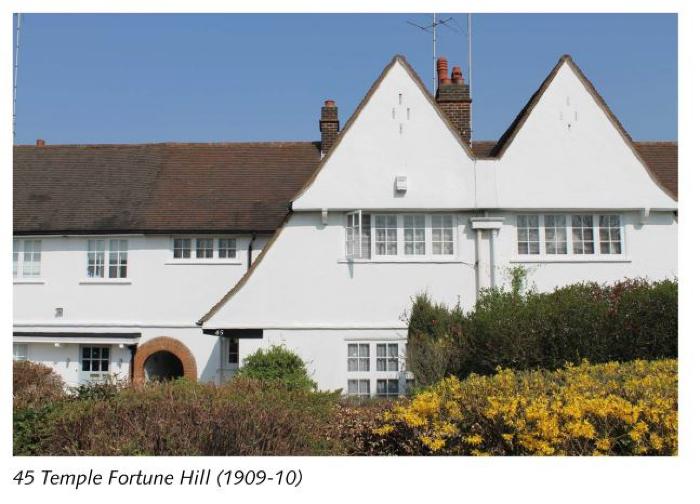
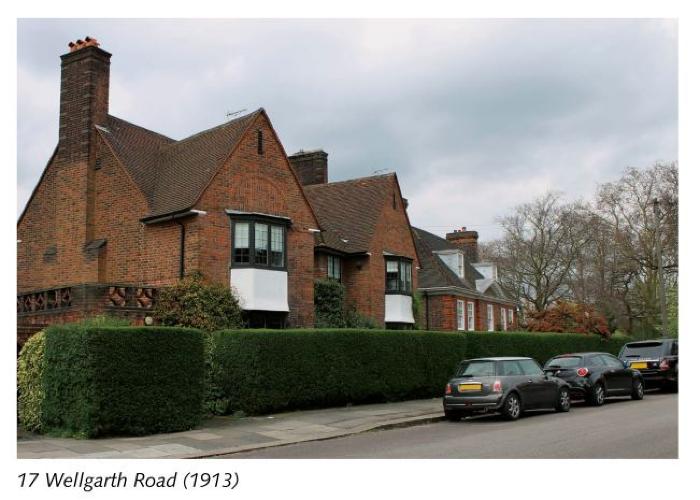
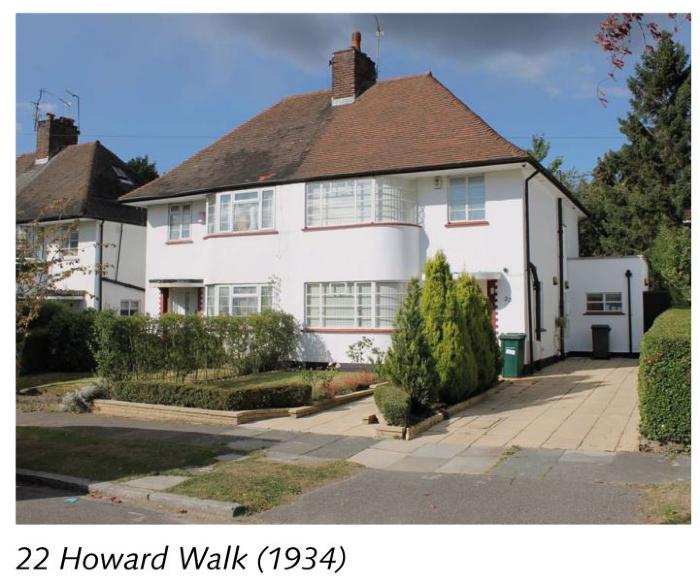
After the war, Crickmer was passed over as the designer for Ebenezer Howard’s new Welwyn Garden City for Louis de Soissons. However, he did manage to be among the first to build at Welwyn, on Handside Lane. In the 1920s, Crickmer partnered with Allen Foxley and designed extensively for the Suburb over the next 20 years.
Crickmer engaged with Art Deco in the interwar period. Howard Walk (1935) is a prime example of this mid-period style, combining Moderne curved glass with a pitched roof, an architectural compromise that was widespread at the time.
Crickmer died in 1971 at Letchworth Hospital, aged 91. He was buried at his church at St Mary’s in Old Letchworth, for which he had designed a vestry in 1932. His career is evidence of an architect who was willing to embrace new architectural fashions within both private and public practice.